A real (new) 100 dollar bill: 1) rough paper and raised print on the portrait's shoulder; 2) a blue 3D ribbon where 100s and bells move when tilted; 3) the 100 in the bottom corner shifts from copper to green; 4) a portrait watermark against the light; 5) a security thread reading USA 100.
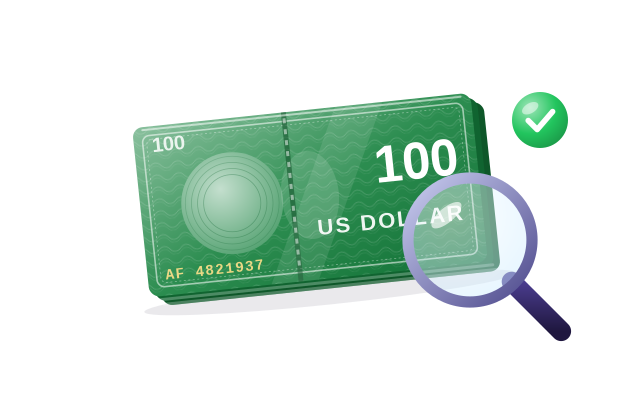
Five features, in the order of the numbers
- Portrait and raised print: the portrait is sharp; the shoulder and collar feel rough.
- Blue 3D security ribbon: woven into the paper, not glued. Tilt the note and the 100s and bells move.
- Security thread: held to the light, a vertical thread reading "USA 100" appears; it glows pink under UV.
- Watermark: a faint image of the same portrait appears in the blank area on the right.
- Colour-shifting numeral: the 100 in the lower right corner and the bell in the inkwell shift from copper to green.
Older dollar designs
All US dollar notes, including older designs, remain legal tender. In Afghan markets, however, some money changers pay less for older, torn or written-on notes — ask before you trade.
Tips at the money changer
- Check and count notes one by one in front of the changer.
- Refuse any note that looks doubtful and ask for an explanation.
- Use licensed, trusted money changers for large amounts.
- Many shops have a UV counterfeit detector — ask them to run your notes through it.
Sources
Security features are based on the official U.S. Currency Education Program (uscurrency.gov). The image on this page is schematic.
Frequently asked questions
What is the most important sign of a real 100 dollar bill?
The blue 3D ribbon whose images move when tilted, and the 100 that shifts from copper to green.
Are old dollars still valid?
Yes, legally — but some changers pay less for them.
What colour does the thread glow under UV?
Pink on the 100 dollar bill.
Related pages
 How to tell real Afghani from fakeWatermark, thread and hologram
 How to tell real gold from fake6 reliable tests and 3 myths


AfghanRates is an independent website. Figures on this page are indicative reference rates and do not replace a money changer, jeweller or bank.